Why Local Processing Matters in a Sleep Sound Recorder
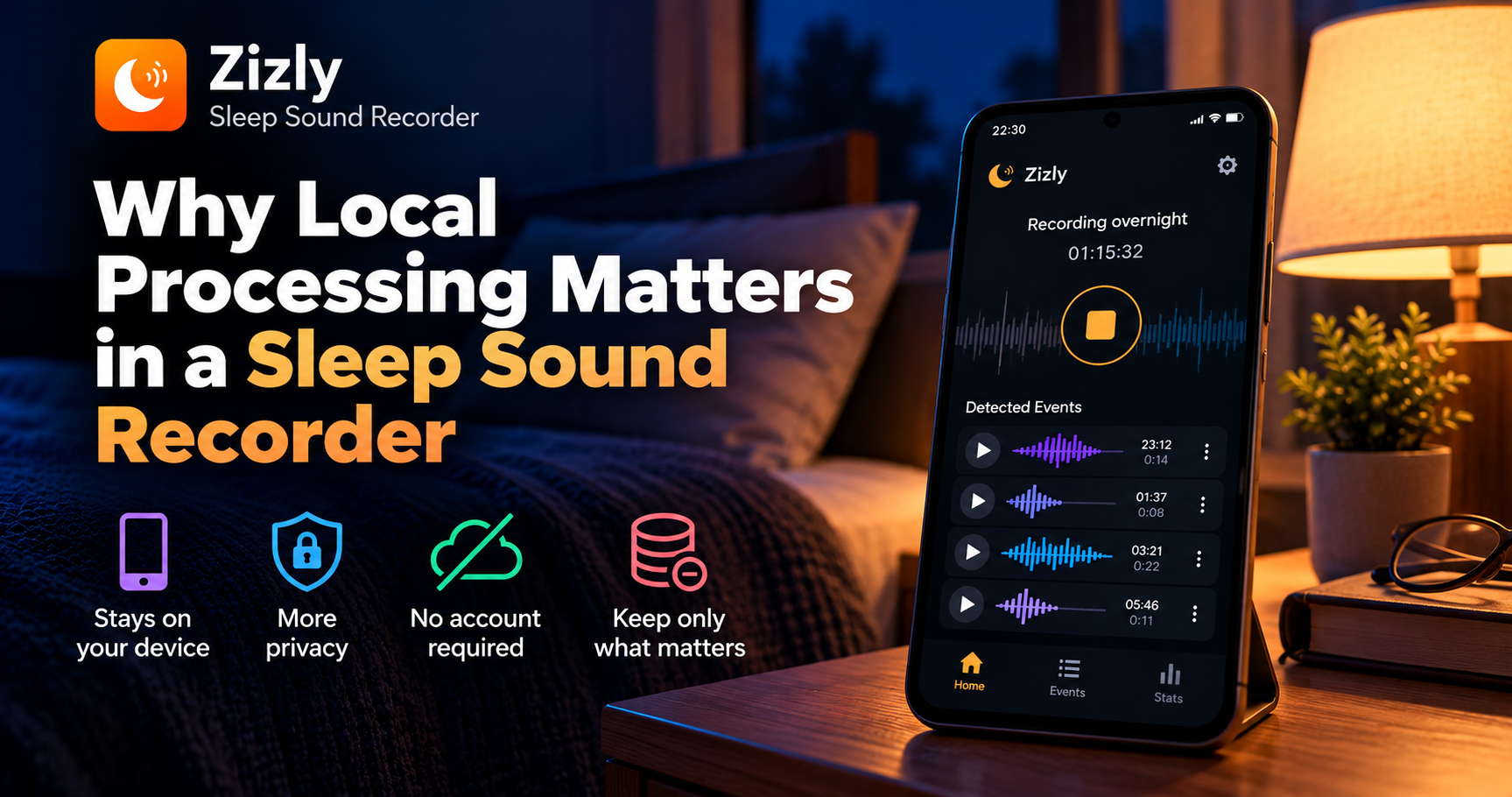
Overnight audio is personal. A sleep recorder should make it clear where recordings stay, what gets stored, and when anything leaves the device.
Overnight audio is unusually personal.
A sleep sound recorder may capture:
- sleep talking
- snoring
- another person in the room
- background conversations
- alarms
- environmental sounds
That means privacy should be part of the product design from the beginning.
The first question should be simple
When someone starts a night recording, they should be able to answer:
Where does this audio go?
For a privacy-focused recorder, that answer should not be vague.
Users should understand:
- whether recordings stay on the device
- whether clips are uploaded automatically
- whether an account is required
- what gets stored
- when something leaves the app
That clarity matters because overnight recordings are different from ordinary app data.
Local processing reduces unnecessary exposure
If sound detection can happen directly on the phone, the app does not need to send an entire night of audio somewhere else just to identify useful moments.
That creates a simpler model:
- the phone records
- relevant sound activity is detected locally
- the user reviews the results
- the user decides what to keep or share
The user remains in control throughout the process.
Less stored audio can also be better privacy
Privacy is not only about encryption or permissions.
It is also about data minimization.
If an app stores every second of an eight-hour session, it creates a large amount of personal data.
If the useful result is only a small set of detected moments, keeping only what matters can reduce unnecessary exposure.
That also makes the morning review easier.
Accounts are not always necessary
Some sleep and audio apps use accounts because they depend on cloud services.
That can be useful.
But if the main purpose is simply to review sounds recorded on one Android device, an account may not be essential.
Local use can reduce:
- login requirements
- remote dependencies
- cloud synchronization
- identity data connected to the recordings
For private overnight audio, that can make the product easier to understand.
Sharing should remain explicit
A recording should not become public or remote just because it was captured.
Storage and sharing are different actions.
The user should decide when a clip leaves the device.
That matters even more if another person may have been recorded during the night.
How Zizly approaches this
Zizly is designed around local overnight sound monitoring.
The app focuses on detecting and organizing relevant sound moments on the device so the user can review them later.
The user decides what is worth keeping or sharing.
Zizly is intended for personal observation and is not a medical diagnostic tool.
Privacy is part of usability
A product feels easier to trust when its behavior is predictable.
Users should understand:
- what is recorded
- what is stored
- what is deleted
- what is shared
For a sleep sound recorder, that transparency is part of good UX.
Final thoughts
A night recorder should not only help users hear what happened while they slept.
It should also make them confident about where those recordings stay.
For personal overnight audio, local processing and explicit sharing create a clearer privacy model.
More about Zizly
About the author
- TSI Dev Studio builds privacy-focused and useful Android apps, with a focus on local-first design, simplicity, and user control.
Comments
Join the discussionNo comments yet. Be the first to comment.